
Why those drifting specks keep following your gaze
Most people notice floaters in a very specific way. A tiny worm-like shape appears for a second, you try to look straight at it, and it slips away. Then it pops back up when your eyes move again. Annoying? Absolutely. Dangerous? Usually not.
These are called floaters, or muscae volitantes, which literally means “flying flies.” The name fits. They can look like dust, cobwebs, translucent blobs, or little threads drifting through your view. But they are not insects, and they are not sitting on the surface of your eye. They are inside the eye itself.

Screenshot idea: a close-up of the animated floater drifting across a bright background.
What a floater actually is
The basic idea is simple: a floater is a tiny object suspended in the vitreous humor, the clear gel that fills most of the eyeball. That object casts a shadow onto the retina, the light-sensitive tissue at the back of the eye. That shadow is what your brain notices.
Floaters can come from small bits of tissue, clumps of protein, or red blood cells. They do not stay still. Because they float in the gel, they drift when your eye moves and then seem to wobble or bounce when your eye stops. That movement is a big reason people think something is “swimming” in their vision.
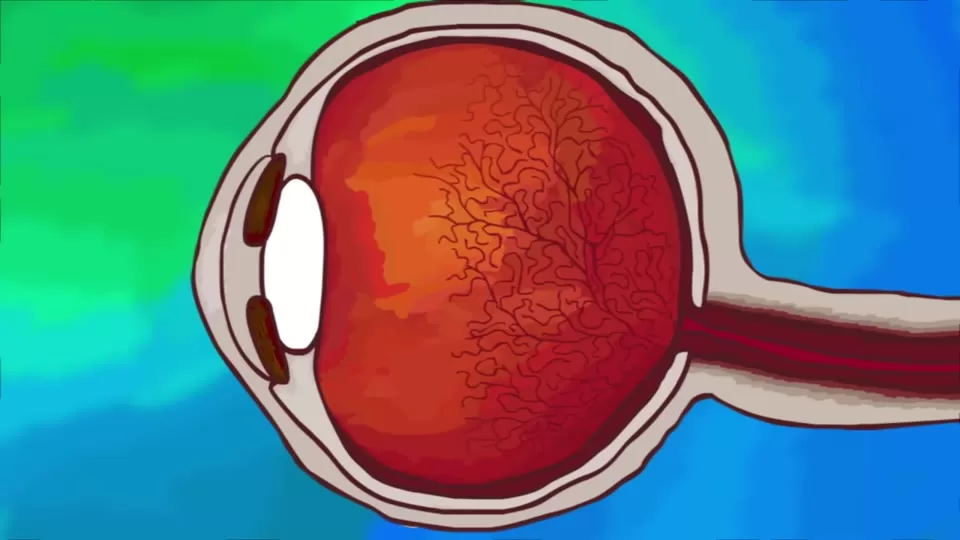
The effect is a lot like holding your hand under a lamp. Move the hand, and the shadow slides across the table. Bring the hand closer to the surface, and the shadow gets sharper. Floaters work the same way. The nearer they are to the retina, the more obvious they tend to look.
Why they show up on bright days and blank screens
Some backgrounds make floaters much easier to spot. A plain white wall, snow, a clear blue sky, or a bright computer screen gives your brain very little detail to latch onto, so the shadow stands out. On top of that, bright light makes your pupil contract. A smaller opening can sharpen the shadow, almost like switching from a wide soft lamp to a single bare bulb.
That is why many people notice floaters at the worst possible times: looking up at the sky, reading on a sunlit day, or staring at a light-colored screen. The floater may be there all the time, but it only becomes obvious when the background is flat and bright.

For people who spend long hours at a computer, that can be extra distracting. It is one reason topics like why airplane mode matters or even how sunlight turns into visible light patterns often come up in the same conversation about screens and brightness. The eye is always reacting to light, even when you do not think about it.
The other blue-sky dots people sometimes confuse with floaters
Not every moving dot in vision is a floater. There is another strange effect called the blue field entoptic phenomenon. If you have ever looked at a bright blue sky and noticed tiny light dots darting around, that is probably it.
This one is different. Floaters are shadows caused by objects in the vitreous. The blue-field effect is light behavior happening inside the retina’s tiny blood vessels. What you are seeing are white blood cells moving through retinal capillaries. Researchers have experimentally confirmed that these moving dots match retinal microcirculation. In other words, your own blood flow can become briefly visible.
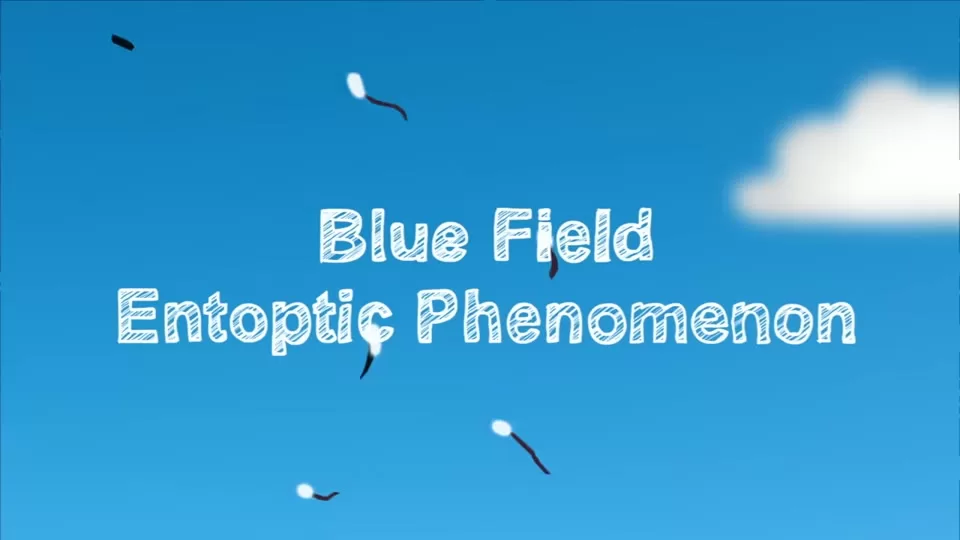
That is a weird thought, but a fascinating one. The “dot” may even seem to have a dark tail behind it, which comes from red blood cells bunching up after the white blood cell passes through. So if the pattern looks more like fast-moving sparks in a blue sky, it may not be a floater at all.
When floaters are harmless and when they are not
Here is the part worth paying attention to. Most floaters are harmless, especially the kind that stay stable for years and slowly become easier to ignore. The brain is good at tuning them out. Many people still notice them now and then, but they stop being the center of attention.
Age is a common reason they appear. Over time, the vitreous can become more liquid and pull away from the retina in a process called posterior vitreous detachment, or PVD. This is often just a normal part of aging, but when the vitreous separates, it can sometimes tug on the retina and cause a tear. That is why eye doctors care about the pattern of symptoms, not just the presence of floaters themselves.

Some people also have a higher chance of getting floaters, including those with significant nearsightedness, diabetes, previous cataract surgery, eye injury, or inflammation or infection inside the eye. None of that means a floater is automatically an emergency. It does mean new symptoms deserve a closer look.
The warning signs that need prompt eye care
A sudden shower of new floaters is different from the one old speck you have had forever. New floaters, especially when they come with flashes of light, can be a warning sign of bleeding in the vitreous, a retinal tear, or even a retinal detachment. Retinal detachment is often painless, so “it doesn’t hurt” is not a reassuring sign by itself.
Watch for these red flags:
- a sudden burst of new floaters
- flashes of light
- a dark curtain or shadow across part of your vision
- new loss of side vision
- blurred or distorted sight
If any of that happens, the safest move is a prompt eye exam. A dilated eye examination is usually needed so the eye-care professional can inspect the peripheral retina and look for tears or detachment. That kind of exam is not optional if the symptoms are new and dramatic.
What treatment usually looks like
For ordinary age-related floaters, treatment is often no treatment at all. That may sound frustrating, but it makes sense: if the floaters are stable and not threatening the retina, the main issue is usually annoyance, not damage. Over time, many people notice them less because the brain simply stops paying so much attention.
There is a surgical option called vitrectomy, which removes the vitreous and the floaters inside it. But it is invasive and comes with real risks, so it is usually reserved for severe cases where floaters are truly disabling. Most people never need it.
If you want a useful comparison, think of it like this: some floaters are like a faint smudge on glasses. You keep noticing it, but you can still function. Others are more like a sudden crack in the lens. That second situation needs help right away.
For a broader look at how the body handles everyday problems, a related read like what happens when you don’t drink water shows the same general principle: some changes are annoying but manageable, while others are a sign to act fast.