A duel that is really a truel
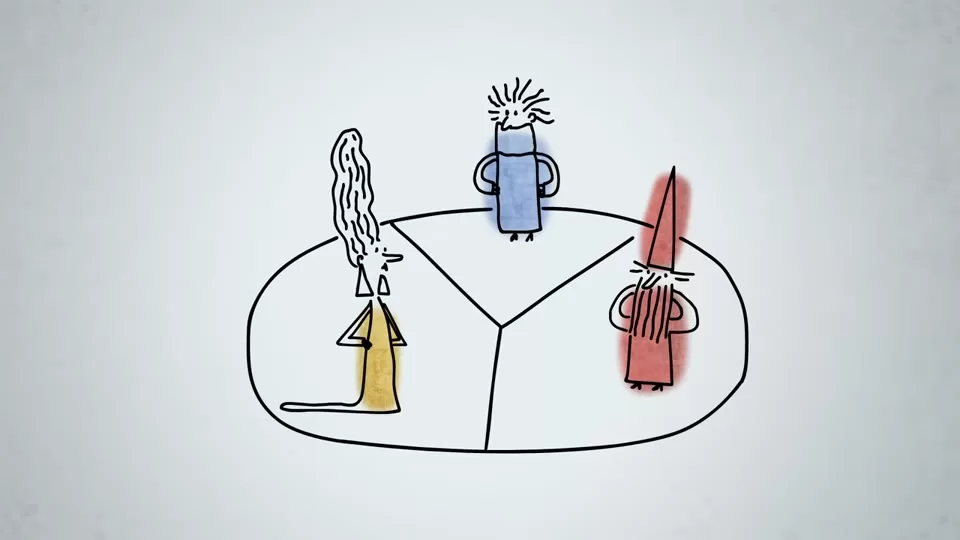
This puzzle looks like a flashy fantasy fight, but underneath it is a classic probability problem. There are three players, each taking turns, and everyone is trying to be the last one standing. That kind of setup is usually called a truel—a three-person generalization of a duel.
The twist here is that turn order matters a lot. You are chosen to go first, the sorcerer goes second, and the enchantress goes third. If no one is eliminated after the first round, the rules force everyone into an absurd failure state: they all become cats. So there is pressure to act, but not every shot is equally smart.
That is what makes this standoff interesting. The strongest wand is not automatically the best choice, because the other two players are also thinking strategically. They will aim at whoever seems most dangerous, not just whoever is closest.
Wand options at a glance
| Wand | Effect | Success rate |
|---|---|---|
| Bannekar | Binds one target with vines | 60% |
| Gaussian | Turns one target into a tree | 80% |
| Noether 9000 | Banishes one target to a distant mountaintop | 100% |
Why the strongest wand is not the smartest opening move
The first instinct is easy to understand: if a perfect wand is available, why not take it? But in a three-way standoff, power creates attention. The moment you become the most dangerous player, both rivals have a reason to target you first.
That matters because the goal is not to win the first exchange. The goal is to survive the whole chain of turns. If you use the Noether 9000 right away, you may remove one opponent, but then the remaining wizard still has a strong chance to eliminate you on their turn. With a 70% accurate attack against you, that is a risky position to be in.
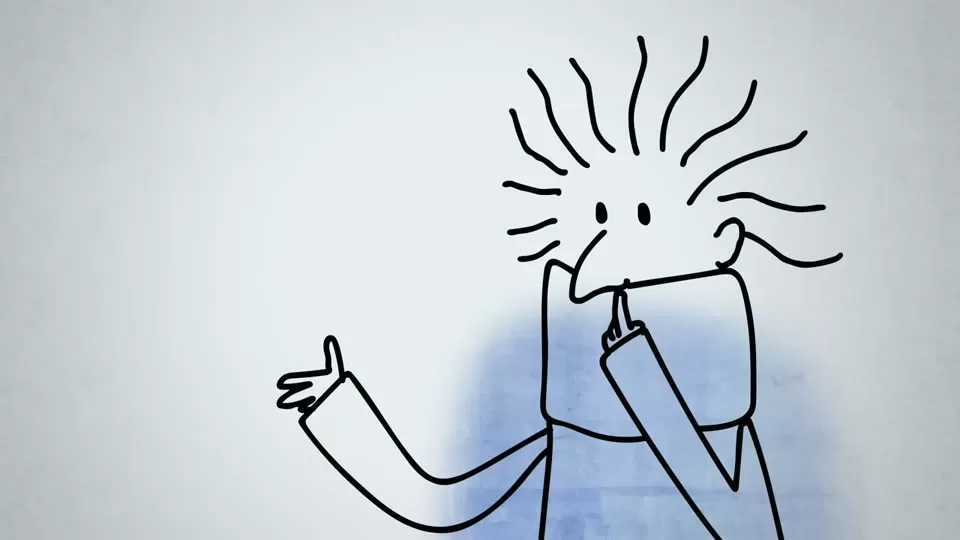
The 80% Gaussian looks appealing too. It is powerful enough to matter, but it still creates a problem: if you successfully remove one rival, the other one may immediately get the chance to finish you off. You are still the obvious threat, and obvious threats tend to get targeted.
This is the part that feels counterintuitive. In one-on-one contests, the strongest move often makes sense. In a truel, the strongest move can paint a target on your back.
The strange logic of deliberately missing
The clever move is to choose the weakest wand and miss on purpose. That sounds wrong at first. Really wrong. But in this setup, it changes how the other two players behave.
If you intentionally do nothing useful, the sorcerer and enchantress are forced to focus on each other. The sorcerer knows the enchantress is more accurate and more dangerous, so he has a strong reason to try to remove her before she gets a clear shot. The enchantress, meanwhile, cannot safely skip her turn, because the rules punish that by turning everyone into cats. She is pushed into action too.
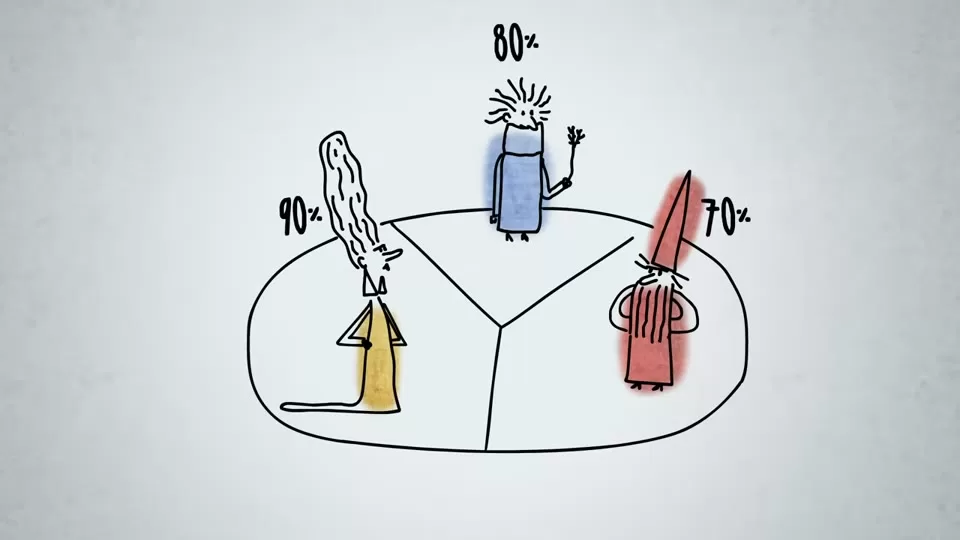
Once they start treating each other as the immediate threat, you get the position you actually want: low visibility. You are no longer the biggest problem in the room. That gives you a real chance to be the survivor who comes in after the better-balanced fight has already reduced the field.
It is a little like stepping back in a crowded argument and letting the two loudest people exhaust each other. Not glamorous. But effective.
What happens when the sorcerer and enchantress turn on each other
Once you miss, the sorcerer is under pressure to shoot the enchantress. If he does and succeeds, he has a 70% success rate, but the surviving matchup still is not ideal for him. You are waiting in the background for the next round.
If the sorcerer misses, the enchantress still cannot safely pass. She must cast, and because you are the most dangerous among the two remaining targets, she is likely to aim at you. That is bad for you in the short term, but it is exactly why the earlier miss matters: it nudges the other two into the most favorable pattern for you over the whole duel.
The important idea is that you are not trying to win every exchange. You are trying to steer the turn sequence toward the situation with the best overall odds. In probability puzzles like this, the best move is often the one that makes everybody else behave in a way that helps you later.
This same kind of thinking shows up in other logic problems too. If you enjoy puzzles where the obvious answer is not the best one, the prisoner hat riddle uses a similar kind of hidden structure, just with hats instead of wands.
Why the Bannekar beats the fancier choices
Here is the key comparison: the Bannekar is the weakest wand, but it supports the smartest overall plan. With it, you can intentionally miss and let the others force the duel into a shape where you are less exposed.
The article of faith here is not “weak is good.” It is more precise than that. The weak wand is good because it keeps you from becoming the biggest immediate threat. That lowers the chance that both rivals aim at you before they have dealt with each other.
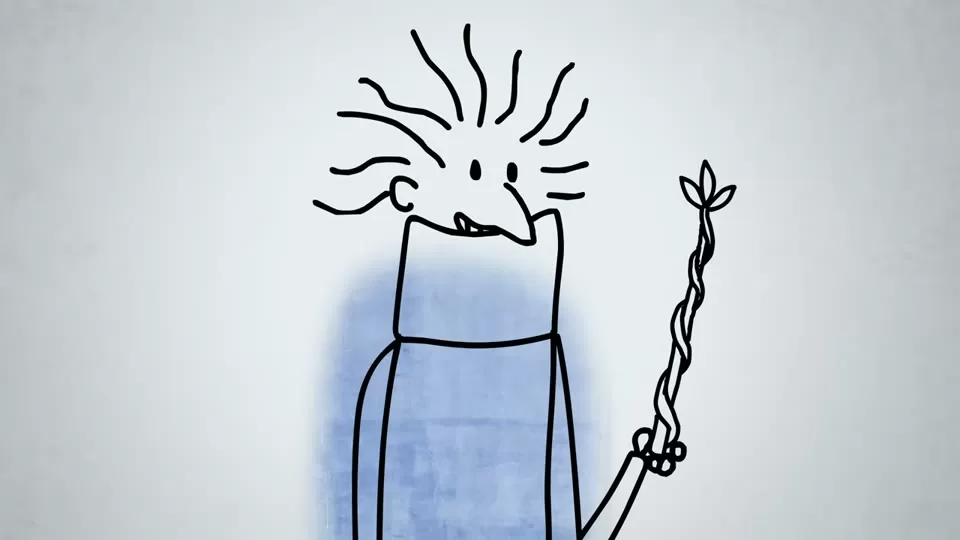
The final odds work out in your favor. Accounting for the possible branches, including the small chance that everybody ends up turned into cats, this strategy gives you better than even odds of winning. The puzzle’s punchline is funny for a reason: the best shot is the one you do not take.
If you like probability puzzles that hinge on a rule-based trick, the bridge riddle is another nice example of choosing the right sequence instead of the most obvious one.
The winning move, step by step
If you strip away the fantasy setting, the strategy is actually pretty simple:
- Go first, because the turn order is fixed.
- Choose the weakest wand, the Bannekar.
- Miss on purpose so you do not become the main target immediately.
- Let the sorcerer and enchantress focus on each other.
- Use the improved odds once the duel has narrowed to the best remaining matchup for you.
The elegance of the solution is that it uses your turn to shape the enemy’s behavior, not just to score a hit. That is the whole game. A flashy attack is tempting, but in a truel, survival depends on how everyone else reacts to it.
For more puzzles where the hidden rule matters more than raw force, the parity version of the prisoner hat riddle is a good next stop.