The lab layout that turns into a puzzle
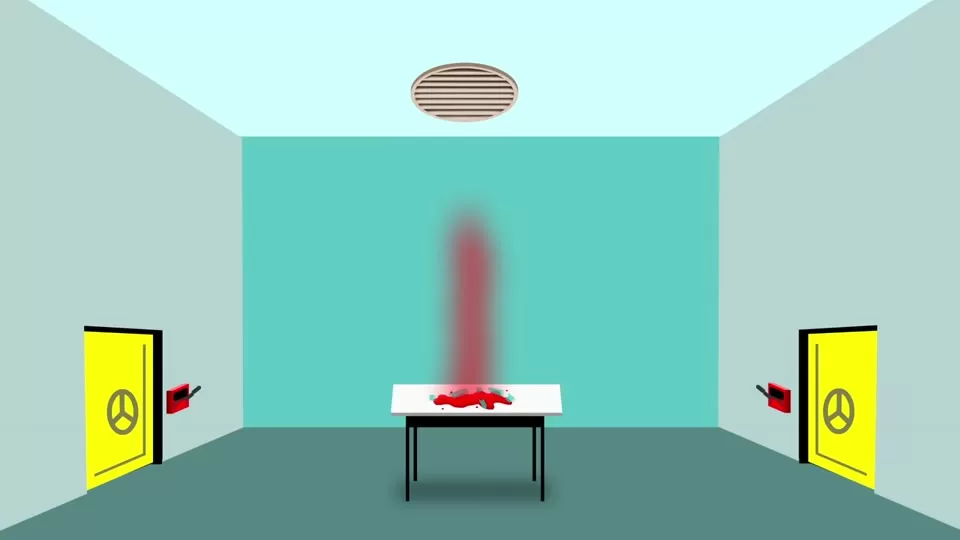
Imagine a four-by-four lab sealed under emergency conditions. The entrance is at the northwest corner, the exit is at the southeast, and every other room has been contaminated by a prehistoric virus. Your job sounds simple enough: enter each infected room, hit the self-destruct switch, and make it out alive.
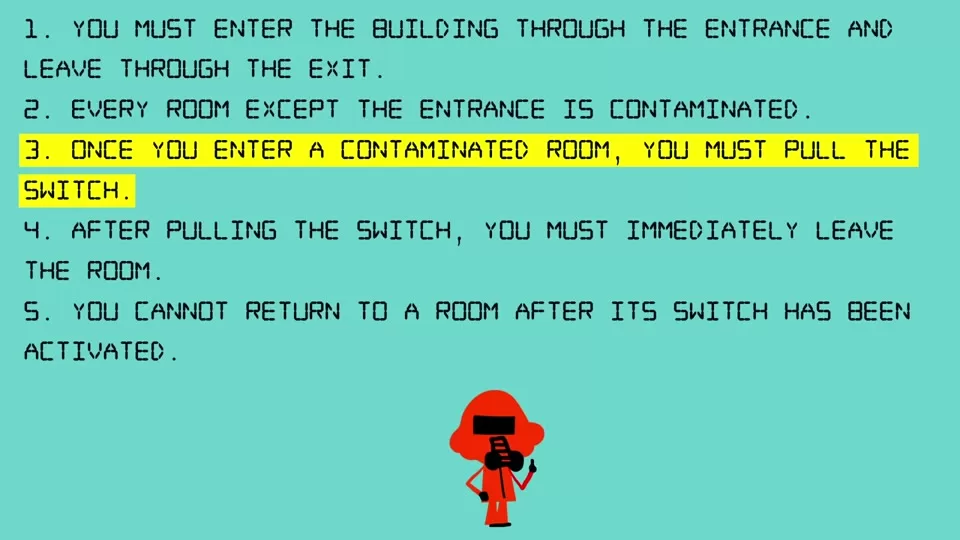
Then the rules get cruel. Once you step into a contaminated room, you cannot leave without triggering its switch. And once that room is destroyed, you can never go back in. That means every move has to be planned in advance. No wandering. No do-overs.

This setup is more than a survival story. It is a classic route-finding puzzle hiding inside a grid, and the first instinct most people have is exactly the right one: draw the rooms and try to trace a path through them.
Why the obvious route fails
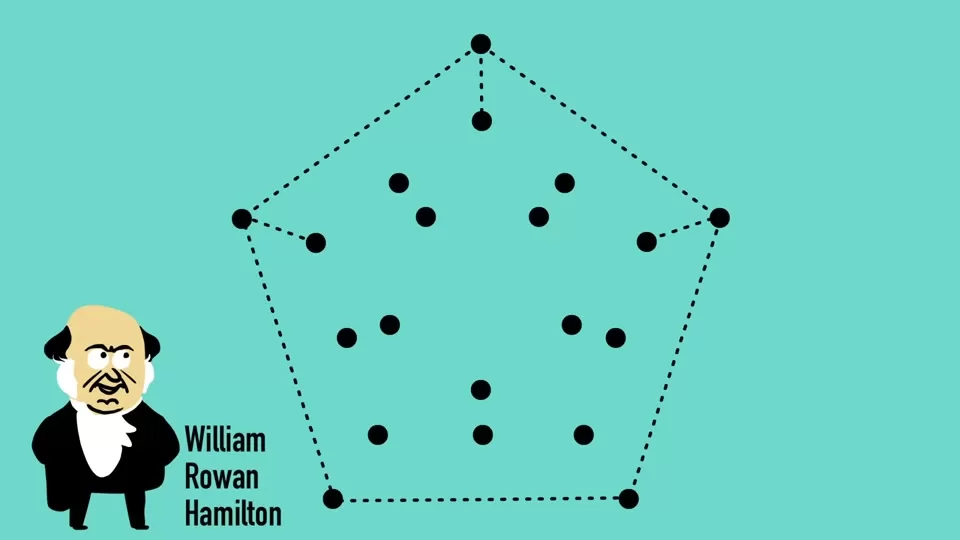
The tempting idea is to look for a path that visits every contaminated room exactly once and still ends at the exit. In graph theory, that kind of route is called a Hamiltonian path. A graph is just a set of points connected by lines, so a room map works nicely as one.
That sounds manageable until you notice the shape of the grid. In a square grid with an even number of rooms on each side, opposite corners always sit on the same color if you imagine the floor like a checkerboard. A path that moves one room at a time must alternate colors on every step.
That tiny detail causes the whole plan to collapse. Start on a black square, and the next room must be white. Then black again. Then white again. If the route uses every room in an even-sided grid, the ending color has to be the opposite of the starting color. But opposite corners on this grid are the same color. So a true corner-to-corner Hamiltonian path cannot exist here.
The parity trick that makes the rule useful
This is where the puzzle gets interesting. It looks impossible, but the wording leaves one loophole wide open: the entrance is never contaminated. That means it behaves differently from every other room.
You are allowed to leave it once without destroying it, because there is no switch to pull there on the first visit. Later, after you have cleared part of the grid, you can come back and use the entrance as the one room that breaks the usual pattern. In other words, the safe room gives you just enough flexibility to route yourself around the color problem.
That is why the puzzle is not really asking for a normal Hamiltonian path from one corner to another. It is asking for a route that uses the safe entrance as a special exception. Once you see that, the “impossible” grid starts to feel a lot less impossible.
If you enjoy this kind of logic puzzle, you might also like the same parity idea in the prisoner hat riddle and its parity trick. Different setting, same style of brain twist.
The route idea in plain English
The clean way to think about the solution is this: you need a path that covers every contaminated room exactly once, but you can treat the entrance as a temporary anchor point rather than just another infected stop. That extra freedom lets you split the grid into workable sections instead of forcing one straight corner-to-corner march.
A simple checklist helps:
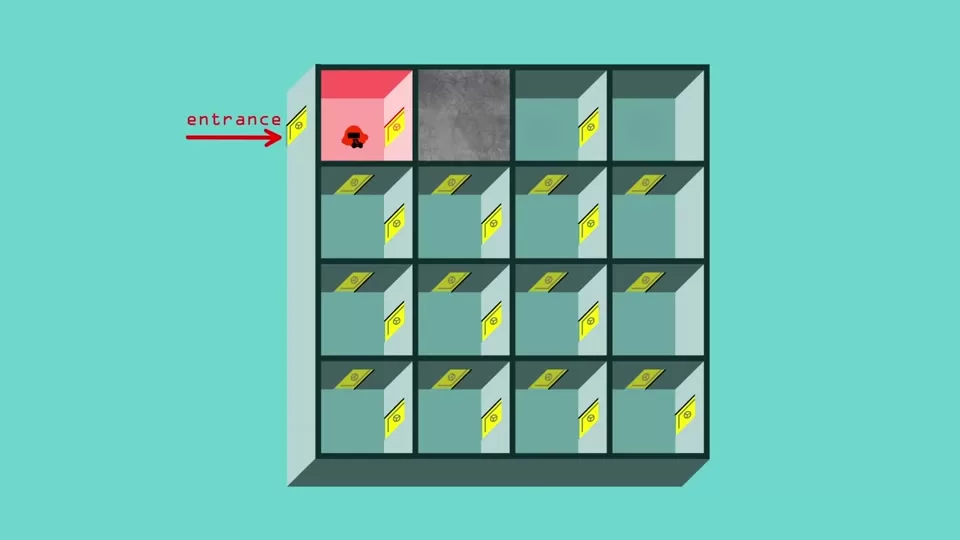
- Map the rooms as a 4-by-4 grid.
- Mark the entrance as the only safe square.
- Remember that moving one room at a time flips color every step.
- Reject any route that tries to finish on the same color as the start when both corners are fixed.
- Use the safe entrance as the exception that makes a full sweep possible.
For a puzzle like this, the reward is not just the final route. It is noticing why so many routes fail. That is the real mental workout.
This same sort of careful step-by-step reasoning shows up in other logic problems too, like the prisoner hat riddle explained through parity and the bridge riddle’s fastest-crossing strategy. Different puzzles, but they all punish sloppy assumptions.
What makes this puzzle worth solving
There is a nice lesson buried inside the panic. A problem can look like pure chaos and still have a clean structure underneath it. Here, the structure is the grid. The key is not brute force. It is pattern recognition.
That is also why mathematicians care about Hamiltonian paths at all. A solution can be checked easily once someone finds it, but discovering one is often hard. In fact, this kind of problem is known to be NP-complete, which is a way of saying that there is no quick general shortcut known for every case.
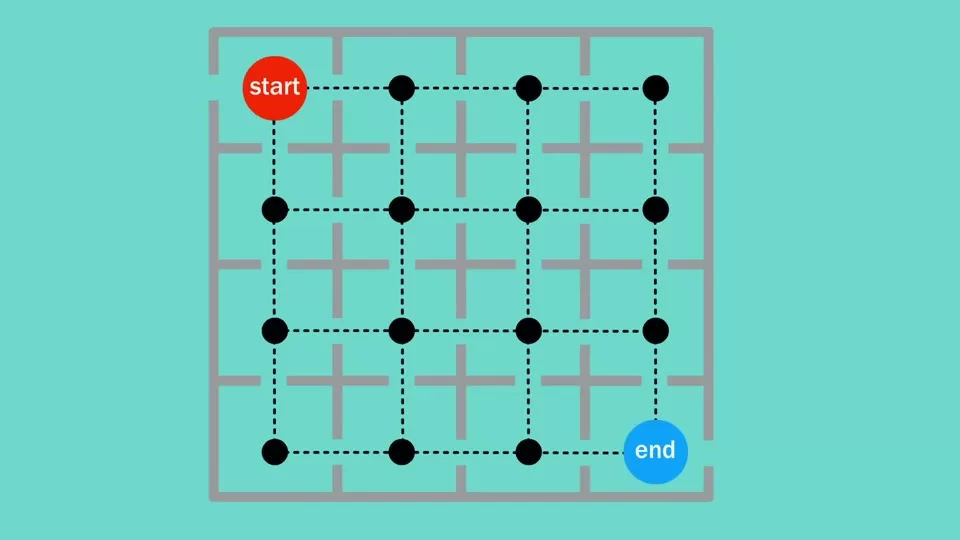
So the riddle does more than ask, “Can you escape the lab?” It nudges you toward a bigger idea: some problems are only crackable when you stop staring at the surface and look at the rules underneath. Once you do, the whole map changes.
A small puzzle with a big idea
The final answer depends on paying close attention to the one room that breaks the pattern. Without that exception, the route cannot work. With it, the escape becomes possible.

That is the charm of the whole setup. It starts as a disaster story, turns into a grid puzzle, and ends as a lesson in parity: sometimes the difference between impossible and solvable is one rule you almost missed.