
A deadly puzzle with a tiny loophole
Imagine being captured by super-intelligent aliens who want to eat you, but only if you fail a logic test. That is the setup of this riddle. It sounds ridiculous, sure, but the actual puzzle is a very clean example of how a single piece of coded information can save a whole group.
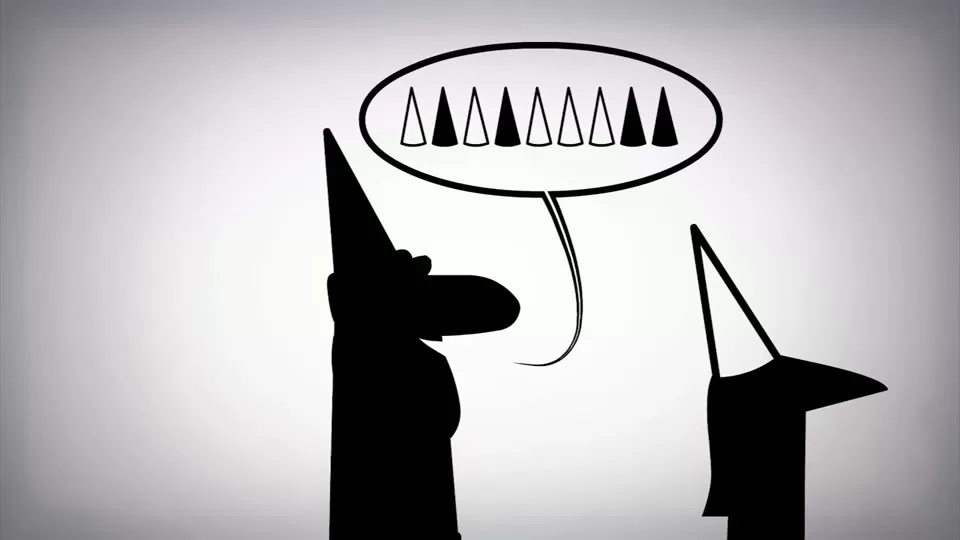
You and nine other prisoners are lined up by size, facing forward. Each person gets either a black hat or a white hat at random. Nobody knows the total count of each color. The only thing the aliens allow is a guess of black or white, one prisoner at a time, starting from the back of the line.
That means the person in back can see everyone ahead, while the rest have less and less information. If at least nine prisoners guess correctly, everyone is spared. So the question is simple: can the group guarantee survival?

Why the first guess matters so much
The trick is that the first prisoner to speak does not have to be right. That sounds strange at first, because the whole point is to answer the hat color. But the riddle allows one wrong answer, and that is exactly the opening the prisoners need.
The person in the back can see all the hats in front of them, so they are the only one who can send a message to the rest. The challenge is to make that message short enough to fit inside the words black or white. No extra hints. No hidden tone. No gestures. Just those two words.
So what can those words mean? They cannot stand for the exact number of black hats, because there are too many possible counts. But there is a neat two-part distinction that fits perfectly: odd or even. That idea is called parity.
Using black and white as a parity code
The prisoners agree ahead of time that the first person will use one word to mean “I see an odd number of black hats” and the other word to mean “I see an even number of black hats.” In the video’s example, the back prisoner says black if the number of black hats ahead is odd, and white if it is even.
That first answer may be wrong about the speaker’s own hat. But it still gives everyone else a shared starting point. From then on, each prisoner can compare what they see with the parity they expect. If the count does not match, they know their own hat must be the missing piece that makes the numbers work.
This is the beautiful part. The group is not trying to guess every hat independently. They are turning the line into a chain of logic, where each correct answer updates the next person’s reasoning.
A sample run with actual hats
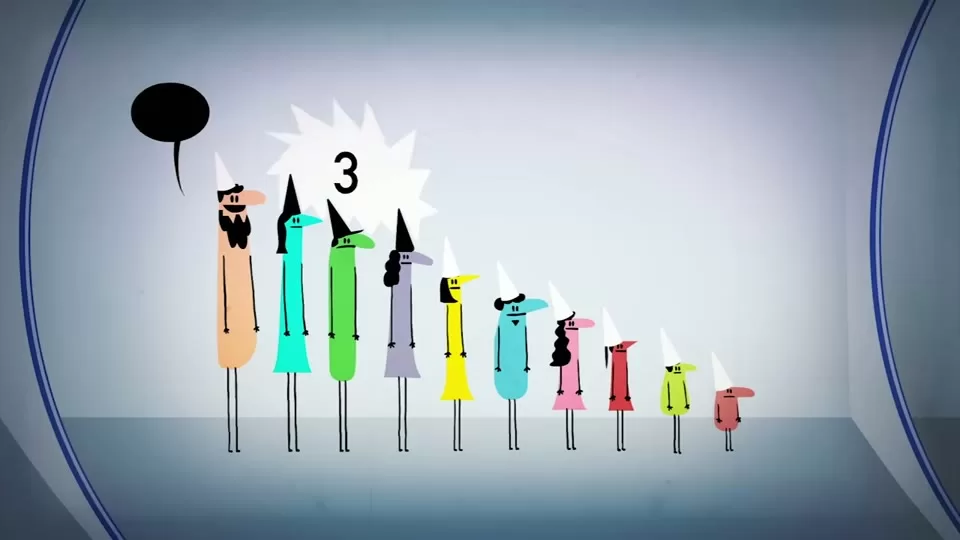
The video shows one specific hat arrangement to make the method easier to follow. The tallest prisoner, who speaks first, sees three black hats in front of him. Three is odd, so he says black. That tells everyone else, “I am reporting an odd number of black hats.”
He may be wrong about his own hat, and that is fine. The second prisoner also sees an odd number of black hats ahead, so she knows her own hat must be white. Why? Because if she had black, the count would no longer match the odd parity announced by the first prisoner.
The third prisoner sees an even number of black hats. That means his own hat must be one of the black hats the people behind him were accounting for. He can deduce it immediately. The logic keeps moving up the line like that, one person after another.
How each prisoner keeps the chain going
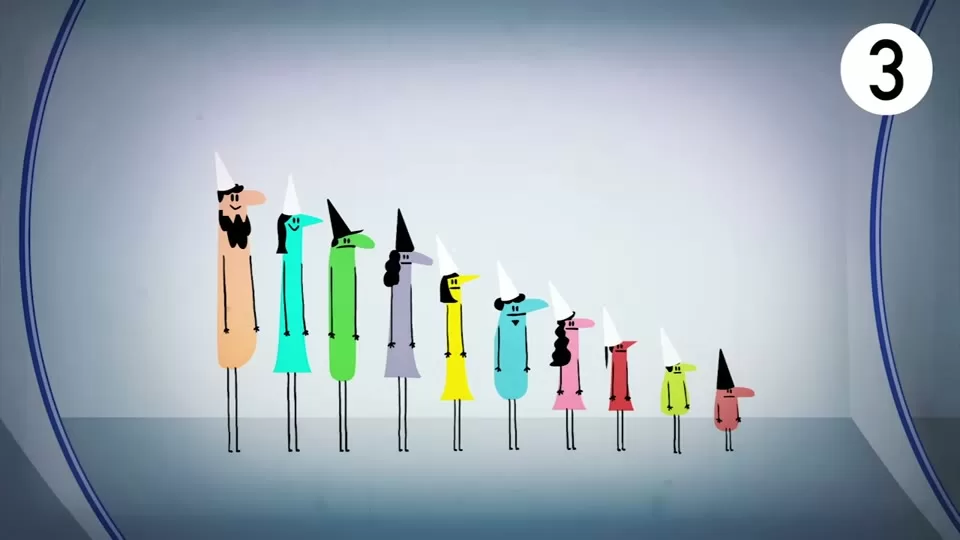
Once the first prisoner has spoken, every later prisoner listens carefully to the answers behind them. That changes what they should expect. If one prisoner has already been identified as black, the next person knows the parity they should look for has switched.
In the example, prisoner four hears the earlier answers and understands that one black hat has already been accounted for behind her. So she now expects to see an even number of black hats in front of her. She only sees one, which means her own hat must also be black.
Then prisoners five through nine do the same thing. They each know what parity they should be seeing, compare that expectation with the hats they can actually count, and solve their own color. It is almost like watching a domino line, except each domino is a reasoning step.
Why this works every time
The key point is that this strategy does not depend on the specific arrangement of hats. Black and white can be distributed in any random pattern, and the method still works. The first prisoner has only a 50% chance of naming their own hat correctly, but they are really serving as the messenger.
That message gives the rest of the line absolute certainty. Each prisoner starts by expecting to see an odd or even number of hats of a certain color. If what they count does not match, the answer is simple: their own hat must be that color.
After each correct deduction, the next prisoner adjusts what parity to expect. So the information is not just being passed along. It is being transformed into something more useful every single time.

The real lesson behind the riddle
This puzzle is fun because it feels like a trick, but the logic is very real. It shows how a group can cooperate under strict limits by using a code that carries just enough information to be useful. No one needs to say everything. Sometimes one carefully chosen bit is enough.
Parity is a tiny idea, but it has a lot of power. Odd or even. That’s it. Yet in this situation, that small distinction lets nine prisoners become perfectly informed after the first sacrifice of certainty.
And honestly, that is what makes the riddle satisfying. The aliens think they have trapped a bunch of humans with a cruel test, but the prisoners turn the rules into an advantage. The only thing the aliens really gave them was a channel. The prisoners supplied the cleverness.

FAQ
Why does the first prisoner get to be wrong?
Because the rules allow at least nine correct answers out of ten. The first prisoner is using their guess as a signal, not just as a personal answer.
Could this strategy work with more prisoners?
Yes. The same idea works for any line of prisoners, as long as the group can agree in advance on what the first word means and everyone hears the answers in order.
Why use parity instead of the exact number of hats?
Because black or white can only carry one of two messages. Odd or even fits perfectly. An exact count would need too many possible answers and would not fit into the allowed responses.
What makes the puzzle so clever
The prisoner hat riddle is a great reminder that good problem-solving is not always about having more information. Sometimes it is about using the little information you do have in the smartest possible way. One person gives up certainty so everyone else can gain it.
That tradeoff feels almost unfair to the aliens. But that is the point. The prisoners do not beat the test with guessing. They beat it with structure, coordination, and a tiny piece of math hiding inside ordinary words.
Watch the Full Video
The original video is available below if you want to see the complete explanation and visual examples.