Invisible signals are everywhere
Most of the time, we never think about it, but the world around us is full of invisible radio signals. They move through the air constantly, carrying information between cell phones, computer’s, GPS systems, routers, satellites, and plenty of other devices.
Your phone is part of that traffic too. It is not quietly sitting there waiting for a message to appear. It is sending and receiving radio waves all the time, and those waves are much stronger than people usually imagine.’
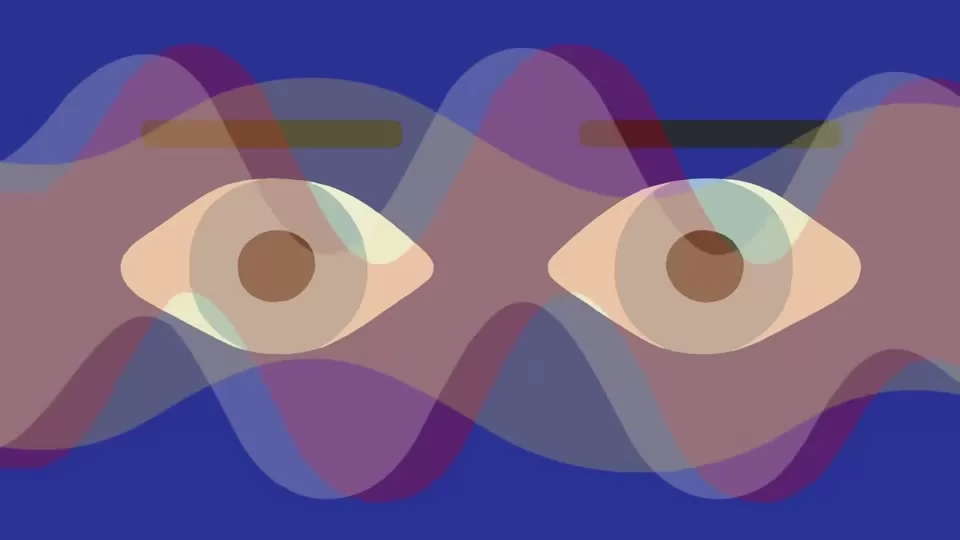
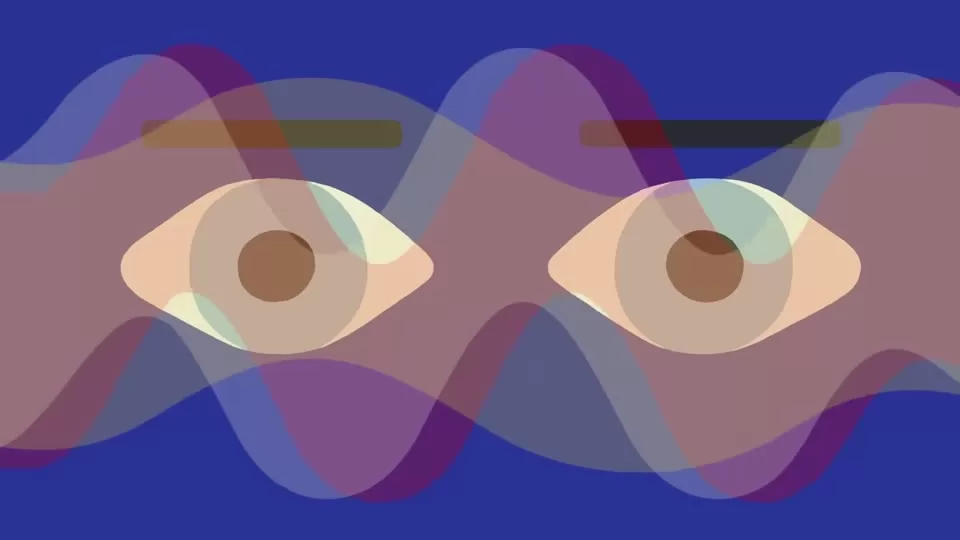
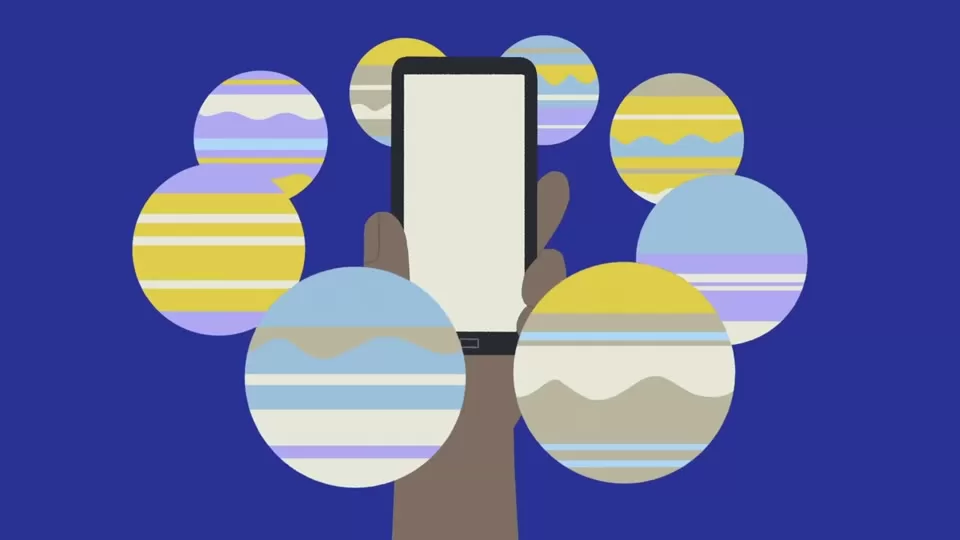
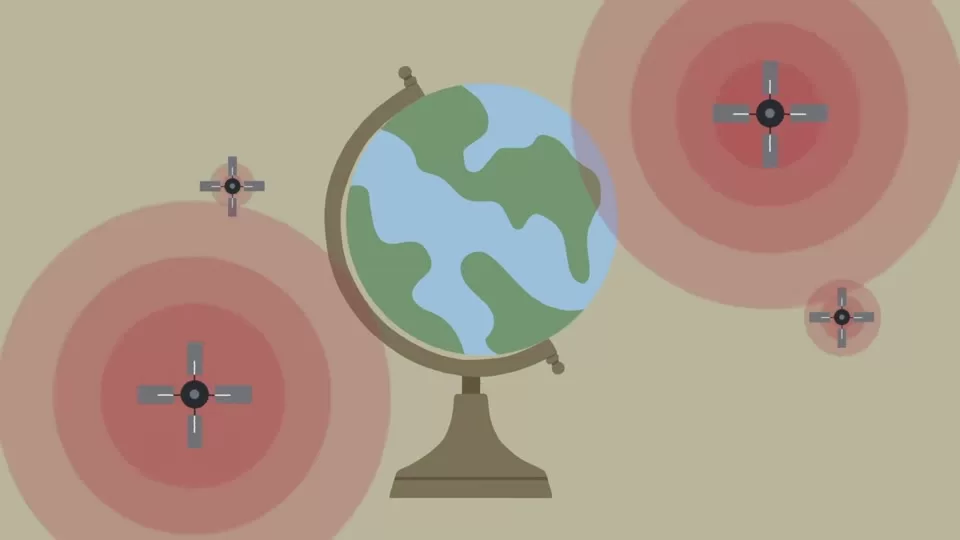
That is why, in the video, the idea is pushed almost to the point of humor: if your eyes could see radio waves, your phone would be visible from Jupiter. That sounds ridiculous, but it gets the point across. Phones are noisy little transmitters.
What airplane mode is really for
A lot of people assume airplane mode exists mainly to keep a plane safe from some kind of direct electronic danger. That is not the main reason. The setting is there to reduce interference for everyone else in the flight path and around it.
When a phone is on, it tries to connect to a network by sending information as electromagnetic waves. In plain language, that means radio waves. These waves live in a slice of the electromagnetic spectrum, the broad range that includes everything from visible light to radio signals.
The important thing is that phones do not just receive signals. They also broadcast them. And when enough devices are doing that at once, the air gets crowded very quickly.
How your phone talks to a cell tower
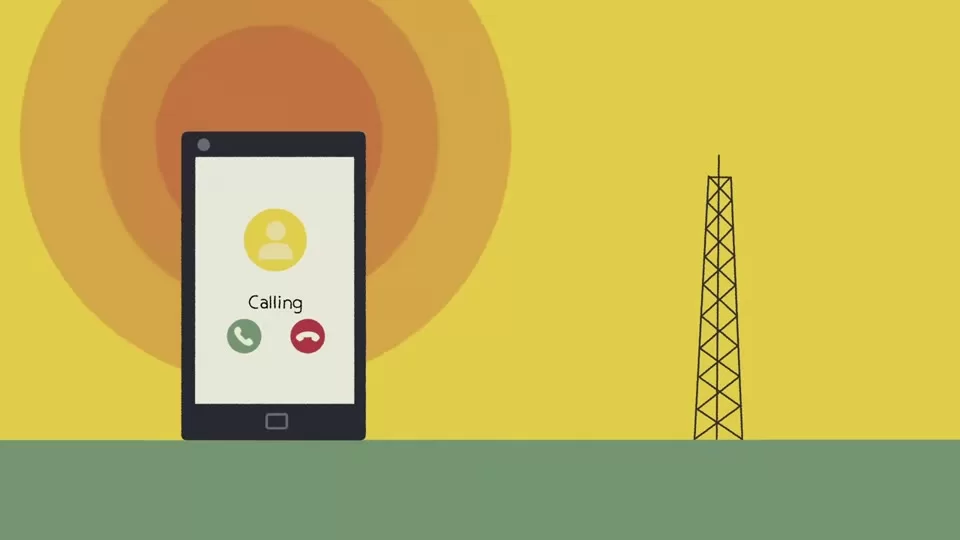
Every call starts with a signal from your phone to the nearest cell tower. If you are in a weak-signal area, your phone does not just give up. It works harder and uses more battery power to send a stronger signal, trying to reach a tower.
Once the tower catches that signal, it passes it along to other towers until it reaches the person you are calling. Simple enough. But here is the catch: your call is only one of many signals in the air.
To keep calls from stepping on one another, cell towers assign phones different wavelengths. The video compares these wavelengths to colors, which is a helpful way to think about it. Each device gets its own lane, more or less, so the traffic stays separate.
Why crowded air becomes a problem
There are only so many wavelengths available. That would be fine if demand stayed low, but it has not. Wi-Fi added even more devices and more traffic, so the fight over space in the radio spectrum got a lot messier.
And then there are moments when everybody tries to connect at once, like during regional emergencies. Towers get overwhelmed. Signals pile up. Interference becomes harder to avoid.
That is the basic reason airplane mode exists in the first place. A single phone may not seem like a big deal, but a sky full of phones all hunting for a network at the same time is another story.
Why phones on planes can be especially noisy
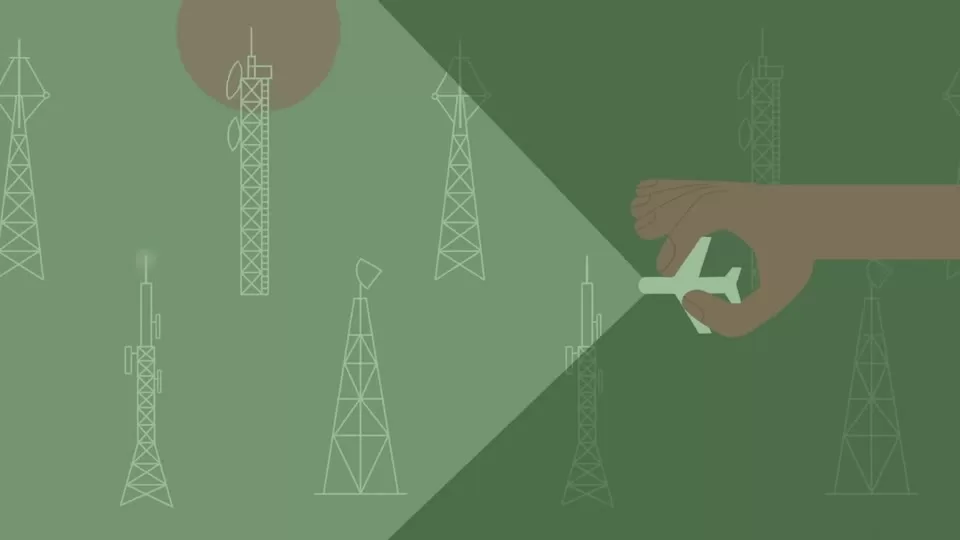
Phones on airplanes are a special problem because they are far from cell towers and keep searching for service. That makes them work overtime, pushing out stronger and stronger signals in the hope of finding a connection.
Then the plane moves. Fast. A phone that was high above the ground and out of range may suddenly pass close enough to a tower to blast it with a much stronger signal than intended. That can drown out signals from people on the ground.
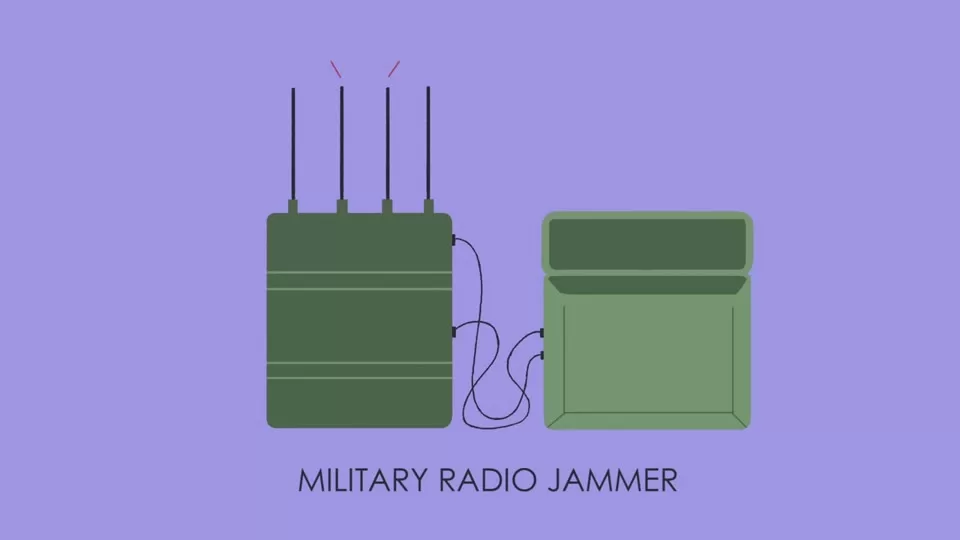
The video uses a blunt comparison here: a phone flying without airplane mode is basically acting like a military radio jammer. That is obviously not what most passengers intend, but the interference can still happen.
This problem is not limited to airplanes
The story does not stop at flights. Even on the ground, lots of electronics leak or emit stray radio waves. The video calls them rogue radio waves, and the result is familiar to anyone who has dealt with a slow connection or choppy call.
Too much interference can push consumers to pay for more bandwidth. Then service providers try to grab more of the spectrum. After that, even more satellites may be launched to carry signals around the globe.
It becomes a cycle. More devices. More traffic. More satellites. More radio noise. The video even warns that this could eventually blot out the stars, which is a dramatic image, but not a random one. It is pointing at how crowded our signal environment has become.
Why astronomers care so much
Radio interference is not just an annoyance for phone users. It also makes life harder for radio telescopes, which look at specific wavelengths to study deep space. These telescopes are not looking at visible light like our eyes do. They are listening to radio signals from the universe.
The video mentions the Very Large Array, which can detect signals across a broad range of frequencies. But if it tries to look below 5 GHz, signals from 5G phones can overpower what it is trying to observe.
That matters because radio astronomy is one of the ways we learn about the cosmos. In places with less crowded skies, telescopes can see the black hole at the center of the Milky Way and detect galaxies unbelievably far away. If the radio background gets too loud, some of that view gets lost.
Can anywhere still be truly quiet?
Not really, at least not in the full sense. The video says that nowhere on Earth is truly radio quiet anymore. Satellites have wrapped the planet in a web of signals, and that makes it harder to find a completely clean listening space.
There are still a few less crowded locations where radio telescopes can work better. Those places matter a lot. They give scientists a chance to see farther into space and study things we could never examine with normal eyes.
That is the big idea behind airplane mode, really. It is a small action on a personal device, but it fits into a much bigger system of shared airspace. The less noise we add, the easier it is for everyone else to use the spectrum too.
FAQ
Does airplane mode only matter on flights?
No. Airplane mode is especially important on planes, but the bigger idea is reducing unnecessary radio transmission whenever your phone is supposed to stay off the network.
Why do phones try so hard to find a signal?
Because they are built to connect. When service is weak, they increase their effort and send stronger signals in order to reach a tower.
Can phone signals really interfere with astronomy?
Yes. The video explains that radio telescopes depend on clean bands of radio wavelengths, and strong phone traffic can drown out the signals they are trying to study.
What all of this really means
Airplane mode is a small switch, but it solves a real problem. Your phone is always part of a much bigger radio conversation, and when too many devices speak at once, the noise spreads fast.
So the next time you tap that little airplane icon, it is worth remembering what is happening behind the scenes. You are not just following a travel rule. You are helping keep the air a little less crowded for cell towers, passengers, and even astronomers trying to hear the universe.