Why old glue changed everything
People have been sticking things together for a very long time. The oldest known glue is more than 8,000 years old, found near the Dead Sea, and it was made from animal bone and plant materials. That old mixture was used for practical jobs like waterproofing baskets and making utensils.
That history matters because it shows adhesives were never a fancy extra. They were part of everyday life. Long before modern manufacturing, people already depended on sticky materials to build, seal, and repair things.

Today the choices are much broader. There are countless kinds of glue and tape, and both can seem almost magical. But the real question is simple: what actually makes them stick?
Glue and tape are not strong for the same reason. They rely on different kinds of bonding, and that difference decides how well they hold up in the real world.
Two kinds of bonds that make adhesion work
To understand stickiness, it helps to separate two ideas: adhesive bonds and cohesive bonds. Adhesive bonds are the forces between the sticky material and the surface it touches. Cohesive bonds are the forces holding the sticky material together inside itself.
Think of it like this: one set of bonds grabs the table, wall, or tool you are trying to fix. The other set keeps the glue or tape from tearing apart on its own. If either one is weak, the whole thing suffers.

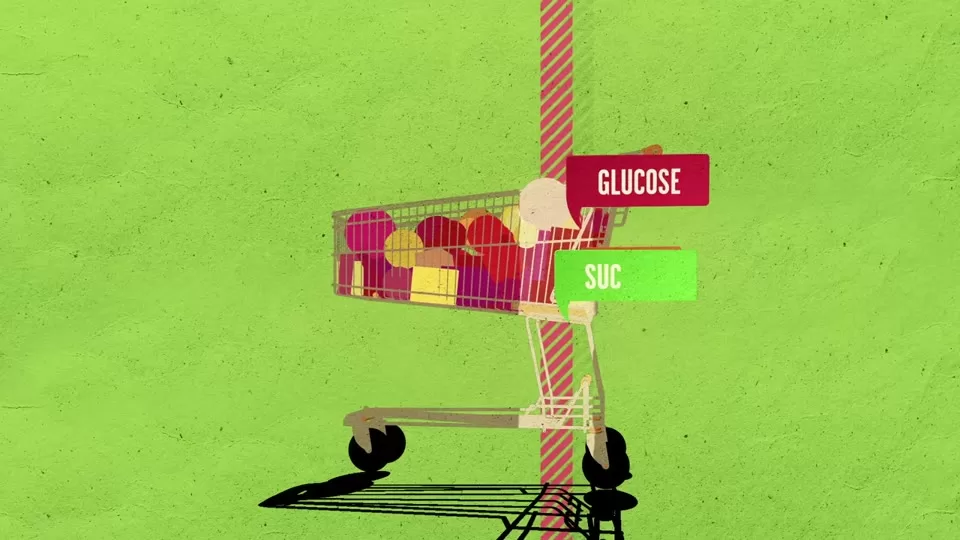
Adhesives can come from synthetic molecules or from natural sources such as starch, milk protein, and tree resin. People have been using all of these in different ways for centuries. Some are simple, some are more chemical, and some are surprisingly sophisticated.
Most glues are polymers dissolved in a solvent. The solvent keeps the glue from sticking inside the bottle, and it evaporates once the glue meets air. That evaporation is part of why many glues smell so strong. Some use water as the solvent, while others use chemicals that should not be breathed in too much.
There are also glues with two or more parts that react chemically after mixing. Those tend to make much stronger bonds because they are not just drying out. They are hardening into something new.
Why dried glue is so stubborn
Once glue dries, the bond is usually permanent. That is one of its biggest strengths. If a glued surface breaks later, you generally cannot just press it back together and expect the same hold. Fresh glue is needed again.
That irreversibility is a big clue about strength. Dried glue is not meant to be peeled off and reused. It is meant to lock surfaces together as firmly as possible.

Among common glues, super glue is famous for making extremely strong bonds. Epoxy is a different kind of winner. It may not always beat super glue in raw bond strength, but it often handles heat and shearing better. Shearing is the sideways force that tries to make materials slide past each other, which is often where repairs fail.
So which glue is strongest? There is no single champion for every situation. If you wanted to hang a heavy object, super glue might look impressive. If heat is part of the job, epoxy may be the safer choice. The “best” glue depends on what it has to survive.
How tape sticks without hardening
Tape works in a much more flexible way. Instead of drying into a permanent bond, it forms weaker and reversible connections, which is why a strip can often be peeled off and used again.
Those bonds are called Van der Waals forces. They are very weak forces that can appear between any two materials, but only when the surfaces are extremely close together. Too far apart, and they do almost nothing.

Most tape has a backing layer coated with a rubber or rubber-like component plus a tackifier. The tackifier is the part that gives it that familiar grab. The exact stickiness depends on several things: how much stretchy material and tackifier are mixed in, how thick the coating is, and what the backing is made of.
Unlike glue, tape does not need a chemical reaction to work. When pressed down, the soft adhesive flows into tiny cracks and grooves on the surface. This behavior is called viscoelasticity, a word that simply means the material can both flow a little and hold its shape a little.
Once the adhesive has filled those microscopic gaps, it gets close enough for Van der Waals forces to take over. That is what keeps the tape in place. It is a neat trick. Not the strongest trick, but a clever one.
Why glue usually beats tape for sheer strength
If the question is only about the absolute strength of the adhesive bond, glue usually wins. Tape is designed more for convenience, quick attachment, and removability than for maximum force.
Still, “stronger” is a slippery word. Glue may be stronger in a lab sense, but it also needs conditions that let it work well. Surfaces must touch enough. The materials have to be compatible. And if the repair will face heat, movement, or stress in different directions, the answer can change fast.

That is why engineers do not just ask, “What is strongest?” They ask things like: Will this survive heat? Will it hold under sideways force? Does the surface allow a real bond? Is the fix temporary or permanent?
In some cases, tape is the better tool simply because it sticks instantly. That can matter in an emergency, when there is no time to wait for glue to cure. In other cases, glue is the only serious option because tape cannot provide the same deep, lasting hold.
There is even a practical zero-gravity problem. Liquid glue is not useful in space in the way it is on Earth, so other repair strategies become more important. Duct tape, with its quick grab and easy handling, has a reputation for emergency use for a reason.
The real answer depends on the job
So which is stronger: glue or tape? In pure bond strength, glue usually has the edge. But that is only part of the story. Tape offers speed, convenience, and reversibility, while glue offers a more permanent connection and can be chosen in many specialized forms for different surfaces and conditions.
That is why the smartest repair choice is rarely about the sticker label. It is about the surface, the force involved, the temperature, and whether you need the fix to last forever or just long enough to get by.

Sometimes the strongest solution is not the one that sounds most impressive. It is the one that fits the job without fuss.