Practice is repetition, but not mindless repetition
Almost any skill gets better through practice. A pirouette, a guitar piece, a baseball throw, a speech, a piano passage — the pattern is the same. You repeat the action because repetition helps you become smoother, quicker, and more confident.

But there is a catch. Repeating something over and over does not automatically make it better. Practice only works well when it is done with a clear goal: improvement. That difference sounds small, yet it changes everything. One person goes through the motions. Another notices mistakes, adjusts, and tries again. Which one improves faster?
What practice is doing inside the brain
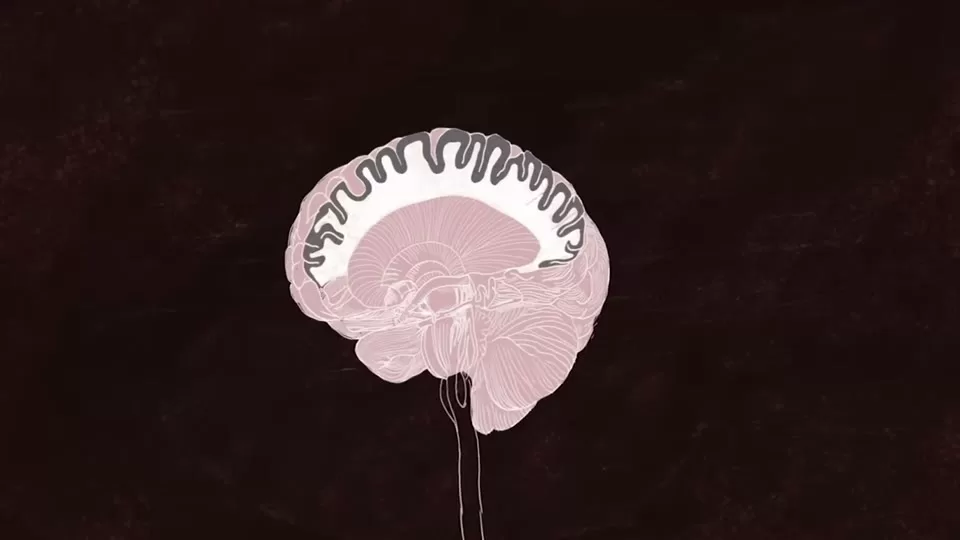
The brain has two main kinds of tissue involved in this process: gray matter and white matter. Gray matter handles information, while white matter is made mostly of fatty tissue and nerve fibers. For movement to happen, signals have to travel from the brain, down the spinal cord, through nerve fibers called axons, and out to the muscles.
That route matters because practice appears to change the way those signals travel. The axons in white matter are wrapped in a fatty covering called myelin. Think of myelin as insulation around an electrical cable. It helps prevent signal loss and lets messages move more efficiently. With repetition, studies suggest that this myelin covering can become thicker. More layers mean better insulation, and that means a faster, cleaner pathway between brain and muscle.

It is a useful correction to a common phrase. Muscles themselves do not really store memory. The skill seems to live in the brain’s wiring instead, in pathways that become more efficient with use.
Why quality matters more than raw hours
People love a magic number. How many hours does it take to become great? How long until a skill is mastered? The honest answer is that there is no single number that works for everyone.
What does matter is the quality of the practice itself. Effective practice is steady, highly focused, and aimed at the edge of what you can already do. That last part is important. If the task is too easy, nothing changes. If it is far too hard, you are just flailing around. The sweet spot is where the challenge stretches you without completely overwhelming you.

That is why experienced performers often treat practice as a precise activity, not a casual one. They are not just collecting hours. They are trying to make each session count.
Cut distractions before they cut your attention
Focus is one of the biggest differences between useful practice and wasted time. Turning off a TV, silencing a phone, or putting a laptop away can sound obvious, but distraction is sneaky. A small interruption breaks concentration, and getting back into the task takes longer than most people think.
One study of 260 students found that they stayed on task for only about six minutes at a time on average. Laptops, smartphones, and especially social media were major sources of distraction. That is not just a student problem. It is a human problem. If your attention keeps hopping around, practice gets shallow fast.

A better approach is simple: create a short block of protected time and make it hard to drift. Even a modest practice session becomes more valuable when it is actually uninterrupted.
Slow down first, then build speed
When learning a physical skill, speed can be a trap. Coordination is built through repetitions, and that includes bad repetitions as well as good ones. If you rush too early, you may be teaching your body the wrong version of the movement.
Starting slowly gives you room to notice what your hands, feet, or posture are actually doing. Once the motion is clean, speed can rise in stages. That gradual increase matters because quality is easier to keep when the movement is still under control. In plain terms: get it right first, then get it faster.

This is why slow-motion practice is so common in dance, music, sports, and other hands-on skills. It is not glamorous, but it saves time later.
Short, repeated sessions beat one endless grind
Another habit shared by many elite performers is repeated practice with breaks in between. Top athletes, musicians, and dancers often spend 50 to 60 hours a week on activities related to their craft, but they usually do not cram all that work into one marathon stretch. They break it into several sessions.
That makes sense. A tired brain is a sloppy brain. Shorter sessions help keep attention sharper and reduce the chance that bad habits creep in. Breaks also give you a chance to reset instead of forcing every repetition through fatigue.

If you are trying to build a routine, this is a good model: practice, pause, come back, repeat. The goal is not to exhaust yourself. It is to stay precise enough that the repetitions actually teach something.
Mental rehearsal can strengthen a skill too
Physical repetition is not the only thing that helps. Once a movement is established, imagining it can reinforce it as well. That may sound surprising, but mental practice has been linked to real improvement in several studies.
One experiment divided 144 basketball players into two groups. One group physically practiced one-handed free throws. The other group only mentally practiced them. After two weeks, intermediate and experienced players in both groups improved by nearly the same amount. That does not mean imagination replaces physical training. It does mean the brain responds to vivid rehearsal more than many people expect.

This is useful when you cannot physically perform the task, or when you want to review a movement in your head before doing it for real. Picture the sequence clearly. Step by step. The brain seems to treat that rehearsal as meaningful work.