A hotel with no end
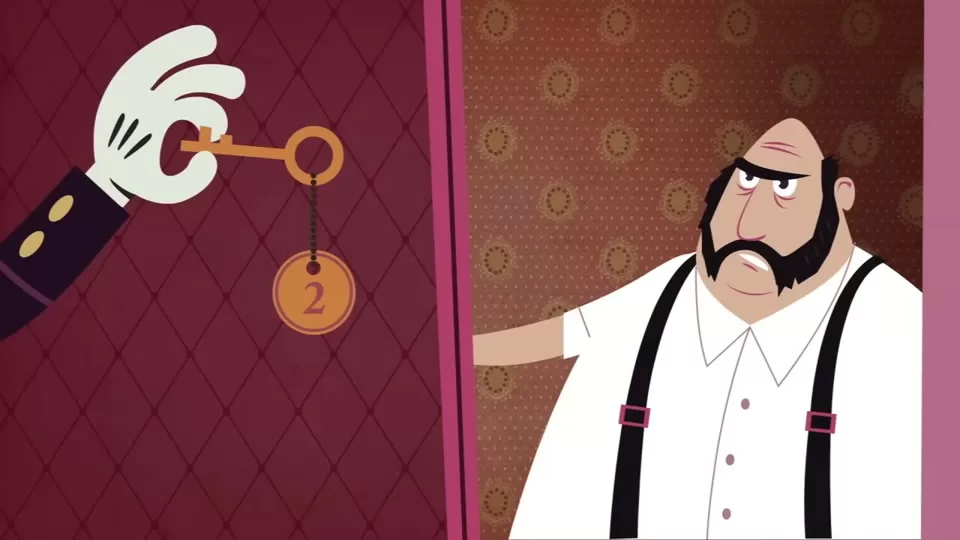
Picture a hotel with an infinite number of rooms. Not a lot of rooms. Not a very large hotel. Infinite rooms. Every room is taken, and somehow the place is still not out of options.
That is the idea behind Hilbert’s famous thought experiment from the 1920s. It was designed to make one thing clear: infinity is not just “really big.” It behaves in ways that can feel flat-out impossible at first.
In ordinary life, a full hotel is simple. No room, no stay. But with an endless row of rooms numbered 1, 2, 3, and so on, the rules change. A guest can still arrive and be fitted in without anyone being turned away.
How one extra guest still gets a bed
Start with a completely full hotel. Then a new guest walks in and asks for a room. The manager does something clever: everyone in room n moves to room n+1.
Room 1 becomes free right away. The guest who was in 1 goes to 2, the guest in 2 goes to 3, and the pattern keeps going forever. Since there are also infinitely many rooms, nobody gets stranded. Every person still has a place.
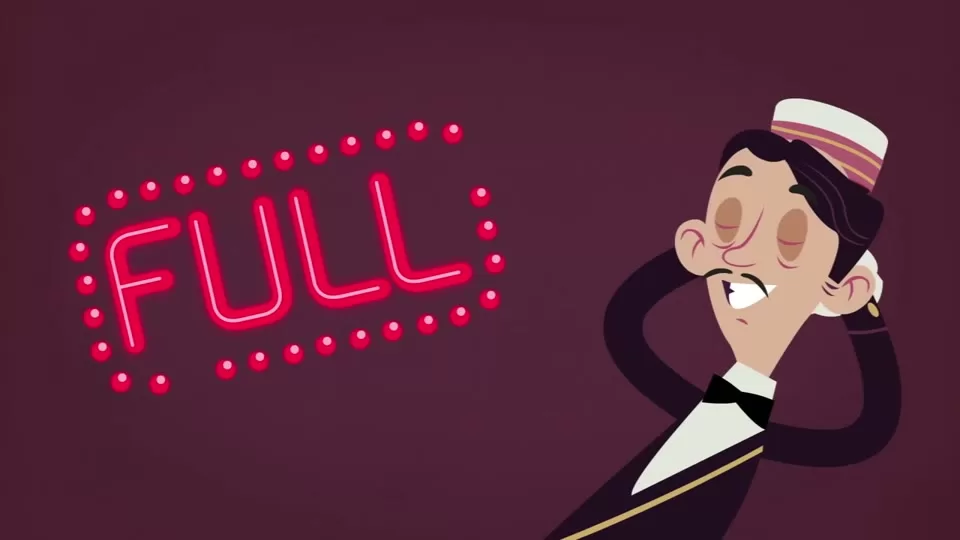
It feels like cheating, but it works because the hotel never runs out of rooms to the right. Once you accept that endless stretch, one extra guest is easy to absorb.
Why forty more guests are still manageable
The same trick works even if a bus pulls up with 40 new passengers. The manager simply moves each current guest from room n to room n+40. That opens up the first 40 rooms at once.
This is the kind of move that sounds impossible until you think about what “infinite” means here. A finite number, no matter how annoying, is still small compared with an endless supply of rooms. Shift everyone over, and the problem disappears.
It’s a neat little lesson in scale. Forty sounds like a lot in daily life. In this hotel, it barely causes a wrinkle.
The odd-number trick for an infinite bus
The next challenge is stranger. Now imagine a bus with a countably infinite number of passengers. That phrase matters. Countably infinite means the people can be listed one by one, just like 1, 2, 3, 4, and so on.
To make room, the manager moves the guest in room 1 to 2, room 2 to 4, room 3 to 6, and continues the pattern. In other words, each current guest goes from room n to room 2n.
That fills only the even-numbered rooms. All the odd-numbered rooms are left empty, and those odd spots are perfect for the passengers getting off the bus. The hotel is still full, but it has also made room for another infinite set of people.
When the buses never stop coming
Things get more dramatic when an infinite line of infinite buses shows up. At that point, the old tricks are not enough. The manager needs a way to keep every group separate so no two passengers end up with the same room number.
The solution uses prime numbers. Primes are numbers like 2, 3, 5, 7, 11, and so on. They are useful because each one can act like its own label, and no prime is built from the others in the same way.
So the first group of current guests gets moved into rooms numbered as powers of 2. The first bus uses powers of 3. The second bus uses powers of 5. Then 7, 11, 13, and so on. For example, someone on the first bus in seat 7 would go to 37, which is room 2,187.
Why primes keep the rooms from overlapping
This works because each room number is tied to one prime base only. A room like 128 fits the pattern 27. A room like 2,187 fits 37. Since the bases are different, the room numbers do not collide.
Not every room gets used. Some numbers, like 6, never appear in this scheme because 6 is not a power of a single prime. That is fine. The manager does not need to fill every possible room; he only needs a unique place for every passenger.This is where the paradox gets really interesting. The hotel can be packed and still have gaps. It can be swamped with new arrivals and still never need to say, “Sorry, we’re full.”
The limit of the trick
All of this depends on one particular kind of infinity: the countable infinity of the natural numbers. Those are the numbers we usually list as 1, 2, 3, 4, and so on. Mathematician Georg Cantor called this level of infinity aleph-zero.
That matters because not every infinity can be lined up neatly like this. If the rooms were based on the real numbers instead, the neat room-shifting strategies would fall apart. Real numbers include fractions, negatives, square roots, and numbers like pi. There is no simple way to list all of them one by one.
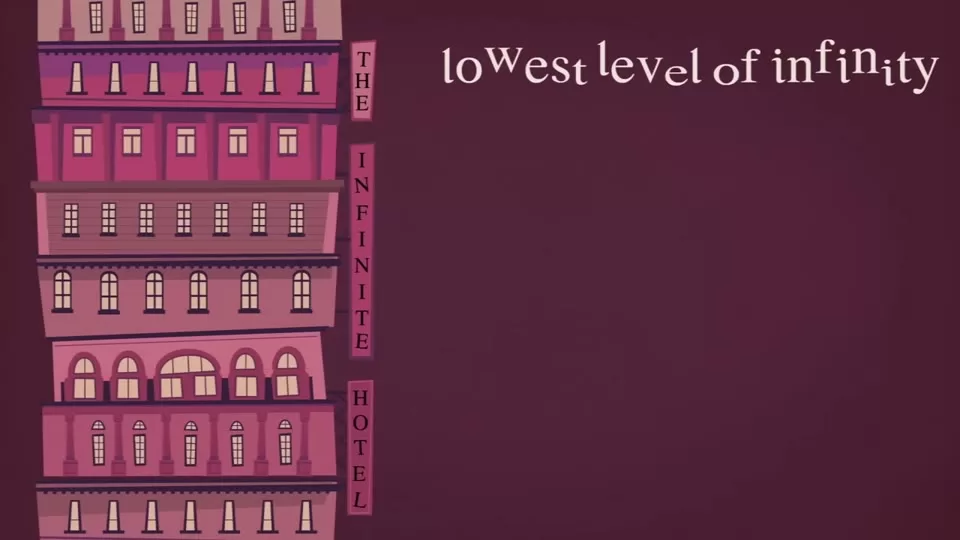
So the hotel works because it lives in the friendly, orderly world of countable infinity. Once you move to larger kinds of infinity, the story changes fast.
Why the real-number version gets messy
Imagine a different hotel with negative-number rooms in the basement, fractional rooms, square-root rooms, and even a room labeled pi. Suddenly the place stops feeling like a tidy hallway and starts looking like chaos.
That is the point. The original hotel is a clean thought experiment because its rooms can be indexed in order. The real-number version cannot be handled with the same straightforward bookkeeping. There are simply too many ways to arrange those numbers, and no neat step-by-step shuffle catches them all.
So the infinite hotel is not really about hotels at all. It is about the difference between kinds of infinity, and why some infinite sets are easier to manage than others.
Hilbert’s hotel is a strange idea, but that is exactly why it sticks in your mind. It makes infinity feel less like a vague giant number and more like a system with rules, loopholes, and surprises. And once you see a full hotel make room for one guest, forty guests, or even infinitely many buses, it gets a lot harder to trust your everyday instincts about “full.”