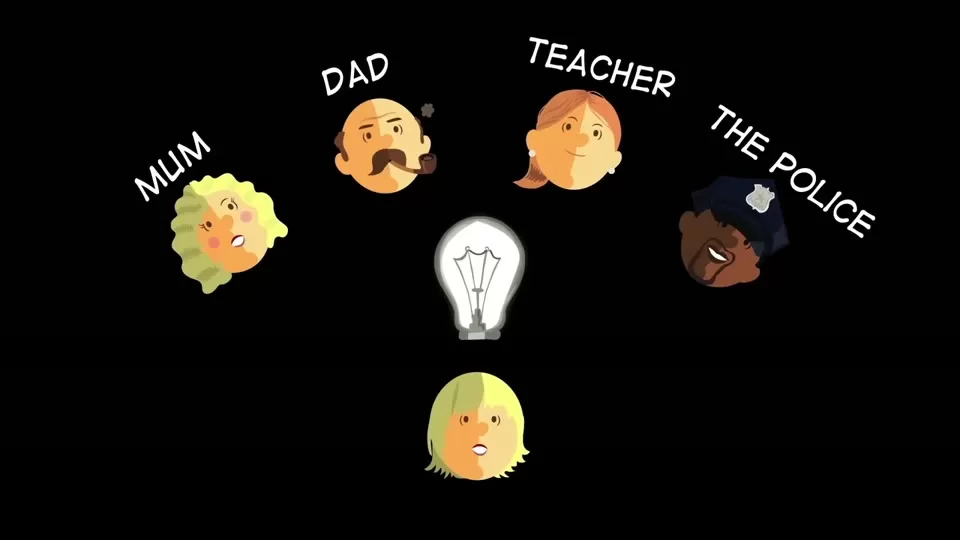
Why the video starts with unanswered questions
The video opens with a simple idea: school is usually about learning answers, but some of the biggest questions in life do not have clean answers yet. Not because people have not tried. Because, right now, nobody actually knows.
That list is a wild one. What is consciousness? Do animals feel pain in the same way we do? Is the future already written? Is there a God? Could robots ever become conscious? The point is not to settle all of these in a few minutes. The point is to sit right at the edge of knowledge and look over it.
From there, the video narrows down to two big mysteries that science, philosophy, and imagination all keep bumping into. The first is the size of reality itself. The second is the silence of the universe.
How many universes could there be?
The first question sounds almost playful at first. How many universes are there? But the video quickly shows why it is anything but small. Even our own world is hard to picture when you think about scale. Then you zoom out to the Sun, which could fit about one million Earths inside it. Then you zoom out again to the Milky Way, with roughly 400 billion stars. Then again to the wider universe, with maybe 100 billion galaxies detectable by our telescopes.
That is already difficult enough. Still, the video argues that this may only be the beginning. Because the galaxies we can see may be only a tiny slice of everything that exists. Space is expanding, and the farthest galaxies are moving away so fast that light from them may never reach us. So even our visible universe is not the full story.
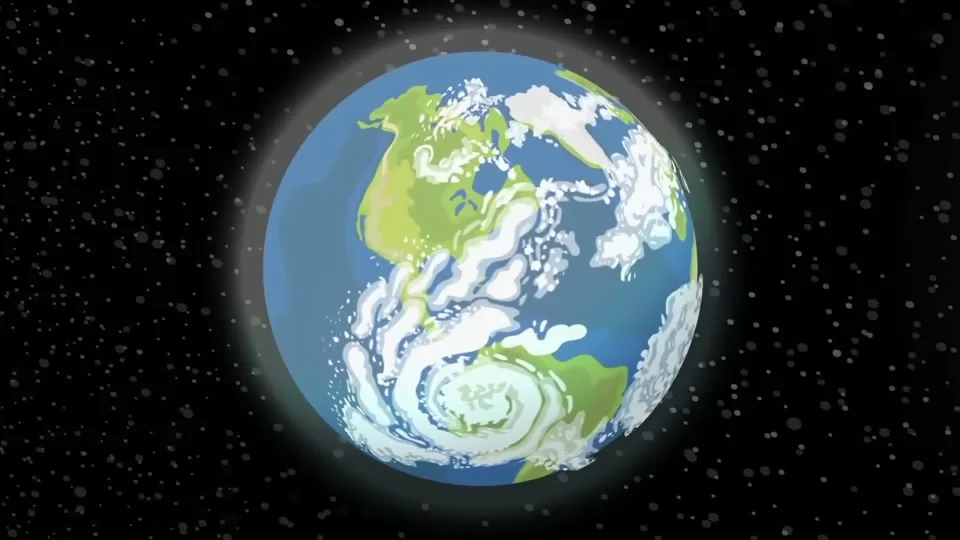
At that point, the idea of a multiverse enters the picture. In some modern theories, including string theory, there could be many universes with different particles, different laws, and different outcomes. Some might vanish almost instantly. Others might not support life at all. The video mentions a version of string theory that suggests something like 10 to the 500 universes. That number is so absurdly huge that even playful comparisons start to fall apart.
Infinity makes the problem stranger
Just when the numbers start to feel impossible, the video throws in infinity. Some physicists think space-time itself may be infinite, which would mean an endless number of pocket universes, each with different properties. That is the kind of thought that makes your brain do a little double-take.
Quantum theory adds another twist. The theory works extremely well, but its meaning is still debated. One possible interpretation says that reality is constantly branching into parallel universes. In that picture, there could be countless versions of you and me, living out different outcomes. In one universe you might land exactly where you hoped. In another, not so much. It is a strange idea, but it shows how much room there still is for debate.Of course, not everyone agrees. Some scientists insist the only meaningful answer is that there is one universe. A few philosophers and mystics go even further and wonder whether even our own universe is an illusion. So the honest answer, for now, is messy. No one has consensus. The real answer could be somewhere between zero and infinity.
The Fermi question: where is everybody?
The second mystery is much easier to say out loud, but maybe harder to live with. If the universe is so huge, and if planets are common, why have we not found any convincing sign of alien life?
This is the famous Fermi question, named after Enrico Fermi, who asked in 1950: “Where is everybody?” That line has stuck around for a reason. It cuts right through the optimism. It is one thing to believe life is possible elsewhere. It is another to explain why the sky still seems quiet.
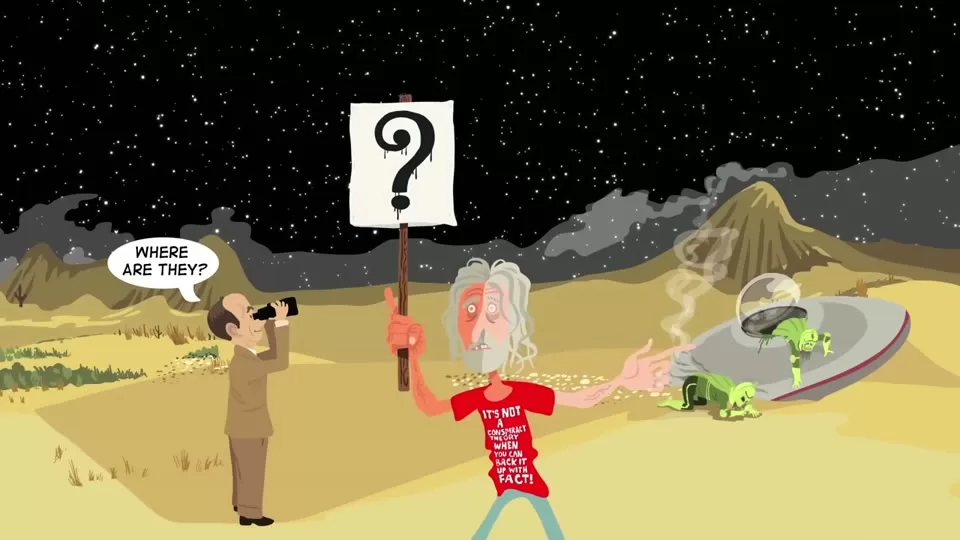
The video points to the Kepler space observatory, which found many planets around nearby stars and suggested that the Milky Way may contain half a trillion planets. If even one in 10,000 has conditions that could support life, that still leaves around 50 million possible life-harboring worlds in our galaxy alone. So the absence of obvious visitors or signals is genuinely puzzling.
And timing matters. Earth formed about nine billion years after the Big Bang, which means a lot of other planets had a big head start. If intelligent life had emerged elsewhere much earlier than it did here, then advanced civilizations could have had millions of years to spread, build enormous machines, or send detectable signals across the galaxy. Yet we still see nothing convincing.
Possible answers, from scary to hopeful
The video walks through several possible explanations, and they range from dark to oddly optimistic. Maybe a superintelligent civilization has already taken over the galaxy and is keeping quiet on purpose. Maybe intelligent life is far rarer than we think. After all, it has happened only once on Earth in four billion years. Maybe we are the first civilization in our galaxy. Or maybe civilizations destroy themselves before they get very far.
Then come the more hopeful ideas. One simple explanation is that we are not searching enough. Only a tiny fraction of stars have been closely examined for signals. Another possibility is that we are looking the wrong way. Advanced civilizations may use communication methods we have not even imagined yet, not just the electromagnetic waves we rely on.
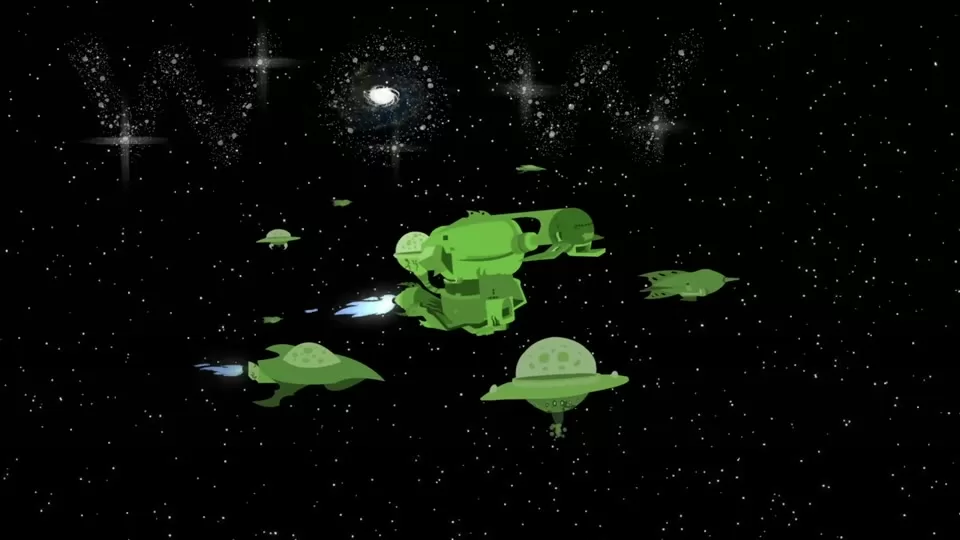
The video even suggests a few stranger possibilities. Maybe most of the action happens in dark matter or dark energy, the mysterious components that appear to account for most of the universe’s mass. Or maybe intelligence shrinks itself down, becoming microscopic to reduce its footprint. If that sounds out there, the video knows it does. It also notes that ideas themselves seem to spread, change, and outlive the people who created them. In that sense, maybe life is already doing something similar.
What scientists are doing next
This is not where the story ends. The video points to a few real efforts that could move the question forward. In the next 15 years, we may start getting more useful spectroscopic information from nearby planets. Spectroscopy is basically a way of reading the light from a planet to learn what it might be made of and whether it looks friendly to life.
SETI, the Search for Extraterrestrial Intelligence, is also making its data public so that more people can help look through it. That means citizen scientists can join the search, not just a small group of specialists. At the same time, researchers on Earth are trying to create life from scratch, including forms that may not even use DNA the way life here does.

Those are all pieces of the same puzzle. We are asking whether the universe is crowded with life, or whether we really are alone. Either answer would be huge. If life is common, then the universe is more alive than we imagined. If we are alone, then our ability to think, dream, and ask questions becomes even more remarkable.
And that is really the mood of the whole video. It does not pretend to solve the unsolved. It shows why the unsolved is worth chasing in the first place.