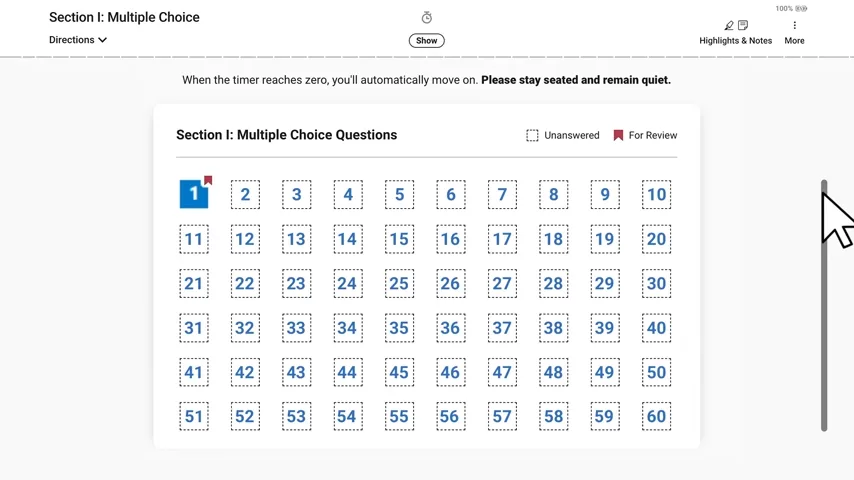
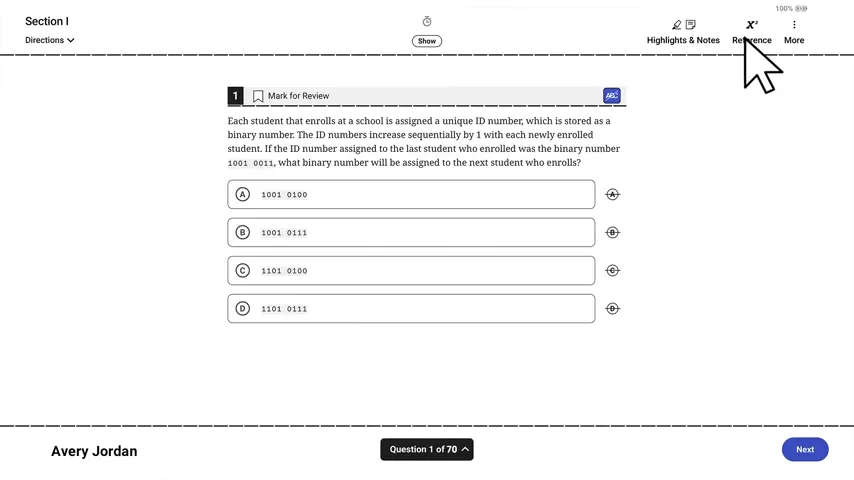
Every spring, about five million AP exams get taken across the US. Some students walk in prepared, some walk in hoping for the best, and a surprising number don’t fully understand how the scoring even works until after they’ve already submitted their answer booklet. If you’re in the planning stage — whether that’s choosing which APs to take or figuring out what score you actually need — this is worth reading before exam day.
What AP Exams Are Actually Testing
The common assumption is that AP exams test how much content you memorized. That’s partially true, but it misses something. The multiple choice sections are designed to reward pattern recognition and conceptual understanding, not just recall. A student who truly understands why a derivative rule works will outperform someone who memorized formulas but can’t apply them under time pressure.
The free response sections (FRQs) are where this becomes obvious. Graders follow a rubric, and partial credit is real — you can get points for setting up a problem correctly even if your final answer is wrong. This is especially relevant in AP Calculus, AP Physics, and AP Chemistry, where showing your work methodically matters as much as getting to the right number.

AP English Language and AP US History operate differently. There the skill being tested is argumentation. You’re not recalling facts — you’re building a case with evidence. Students who struggle with those exams usually aren’t struggling because they don’t know history. They’re struggling because they haven’t practiced constructing a tight, evidence-based argument under time constraints.
How the 1–5 Score Scale Actually Works
The scoring scale looks simple on the surface: 1 through 5, where 3 is passing and 5 is the highest. What most students don’t realize is that the raw score cutoffs shift every year based on exam difficulty and overall performance. A 5 on AP Calculus AB one year might require 68% of raw points; another year it might be 63%.
This is called the score curve, and it’s one of the least-explained parts of the whole AP process. College Board doesn’t publish exact conversion tables until after the exam, which creates a lot of confusion. Students often don’t know whether their performance actually earned a 4 or a 5 until scores release in July.
If you want to get a realistic sense of where you stand before official results, tools like the score calculators at APScoreHub use historical curve data to estimate your score from raw points. It’s not a guarantee, but it gives you a reasonable benchmark and takes the guesswork out of the wait.
Does a 3 Actually Help You?
Short answer: it depends entirely on the school and the subject.
Some universities — particularly large state schools — accept a 3 on most AP exams for credit. Others, especially selective privates, require a 4 or 5, and some don’t accept AP credit at all for certain departments (looking at you, pre-med programs that won’t let you skip Bio 101 no matter what).
The practical value also depends on the course. Skipping introductory Calculus with a 5 on AP Calc BC saves you real time and tuition money. Skipping intro Psychology with a 3 on AP Psych might save you three credits that your major didn’t require anyway.
Before you decide which APs are worth prioritizing, it’s worth looking up the specific credit policies at the schools you’re targeting. Most universities publish these online, and the differences between schools can be significant.
The Courses That Are Actually Hard vs. the Ones That Just Have a Reputation
AP Physics 1 has a notoriously low pass rate — typically around 40–45% of test-takers score a 3 or above. AP Chemistry isn’t far behind. These aren’t hard because the College Board made them arbitrarily difficult; they’re hard because the concepts genuinely require time to develop, and most students underestimate how different university-level physics feels compared to high school science.
On the other end, AP Environmental Science and AP Human Geography tend to have higher pass rates. That doesn’t mean they’re easy — it means the content is more accessible to students who put in consistent study time.
AP Calculus AB sits somewhere in the middle. The curve is generous enough that strong algebra skills and solid understanding of derivatives and integrals can get you to a 4. The students who fail usually either ran out of time or didn’t practice enough FRQ problems before the exam.
How to Prepare Without Burning Out
The students who do best on AP exams generally share one habit: they started reviewing early and kept sessions short. Cramming two weeks before the exam works sometimes, but it’s not reliable for conceptually dense subjects.
A few things that actually help:
- Practice FRQs from past years. College Board releases real FRQs with scoring guidelines going back a decade. These are more useful than any third-party prep book.
- Learn the scoring rubrics. For written exams especially, understanding what graders are looking for changes how you write your answers.
- Don’t ignore the calculator sections. A lot of students drop points on AP Calculus and AP Statistics by not knowing their calculator well enough. The functions are allowed — you should be fast with them.
- Check historical score distributions. Knowing that roughly 20% of test-takers score a 5 on AP US History gives you a realistic target to calibrate against.
The preparation strategies that work are rarely glamorous. They’re just consistent.
One Thing Worth Remembering
AP scores matter — but they’re one variable in a larger picture. Colleges weigh the rigor of your course selection, your grades in those courses, and your actual exam scores together. A student who takes six APs and scores 3s across the board sends a different signal than a student who takes three APs and scores 4s and 5s.
Choosing the right courses for your actual interests and working depth over breadth tends to serve students better than loading up on AP credits just to have them on a transcript.